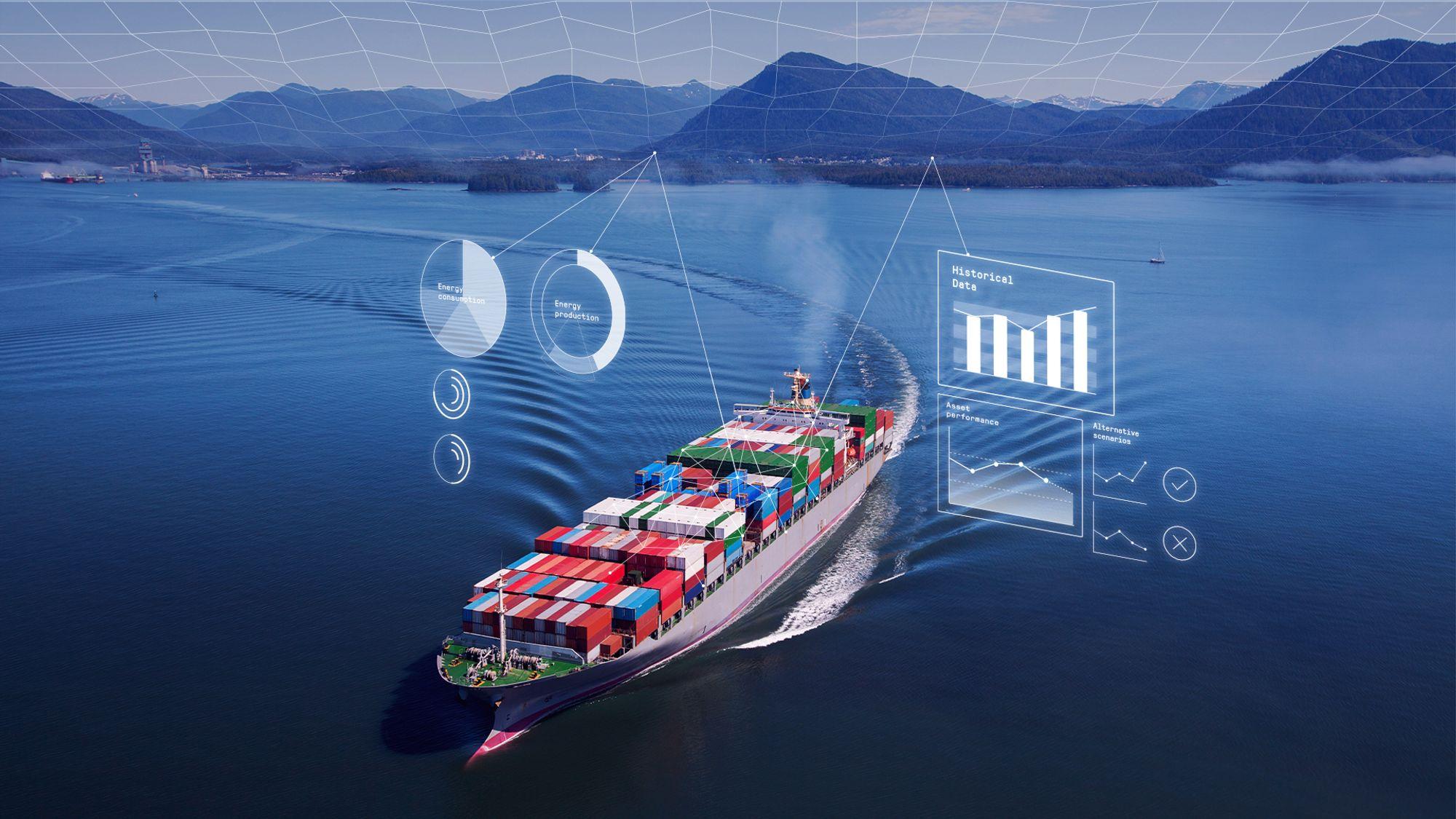
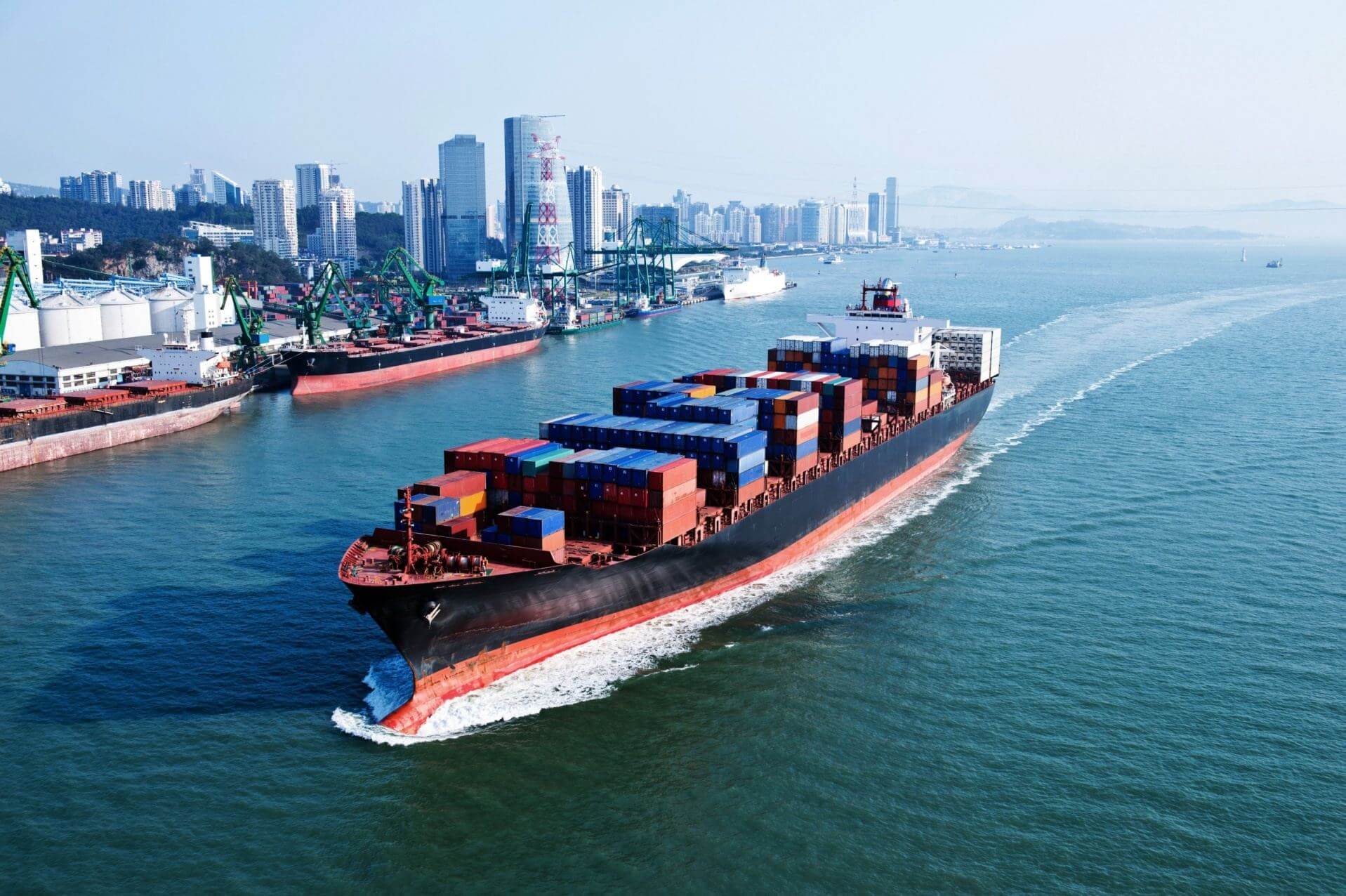
To showcase live fleet visibility, voyage tracking, arrival planning and connected operations.
Record GPS coordinates, distance travelled, course, average speed and estimated arrival time.
Monitor engine RPM, propeller revolutions, propeller slip and technical performance indicators.
Track daily fuel consumption by grade, remaining fuel stocks, lubricating oils and fresh water.
Document wind direction, wind force, sea state, swell, currents and air temperature.
Maintain vessel identity, IMO number, voyage number, cargo information and operational remarks.
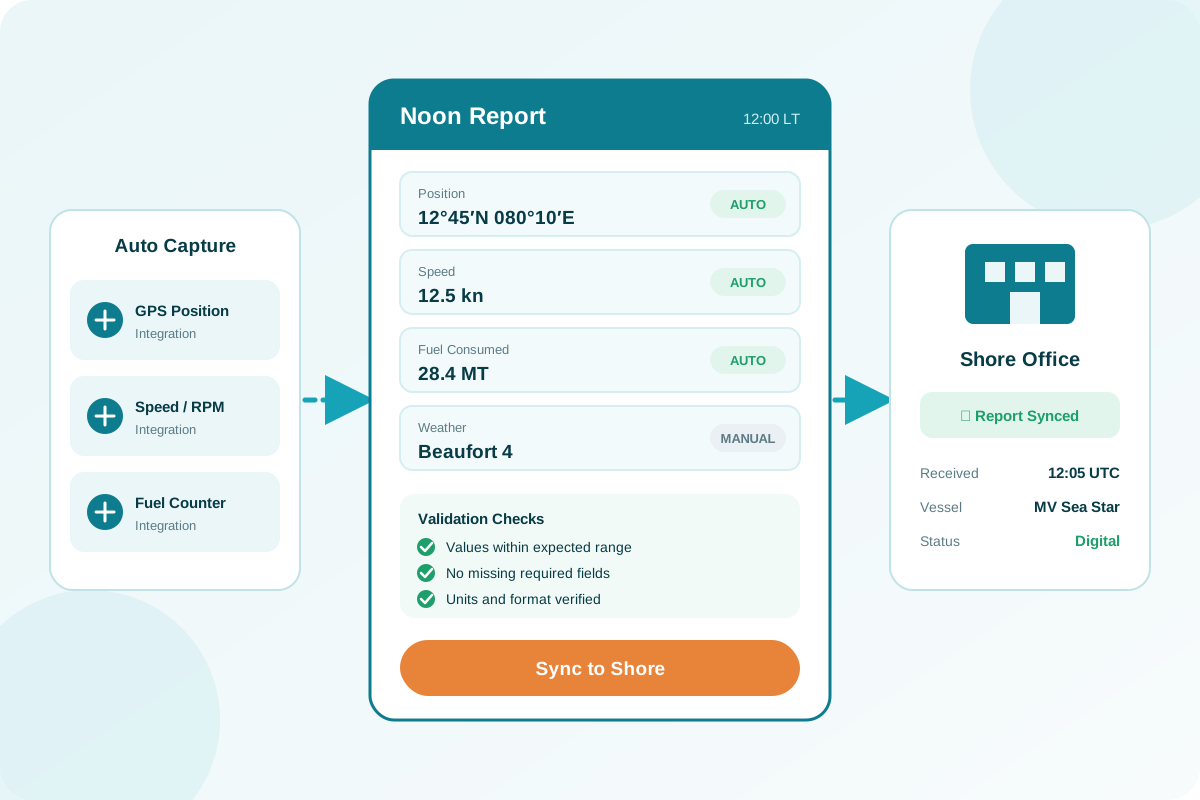
Validate report entries, support AIS and sensor data integration, and synchronize reports between vessel and shore.
Connect ship-to-shore reporting to improve operational visibility, monitor efficiency and fleet decisions.
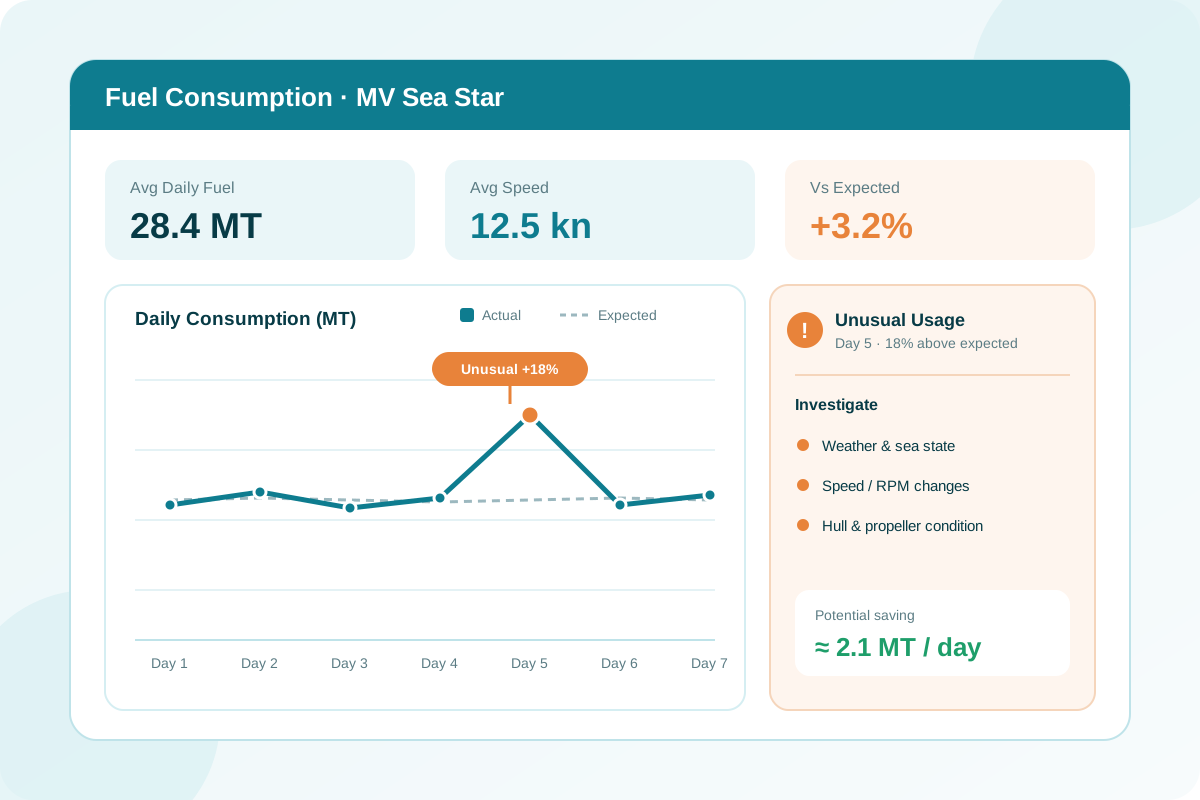
Compare daily fuel consumption with vessel performance to identify unusual usage, investigate inefficiencies and support fuel-saving decisions.
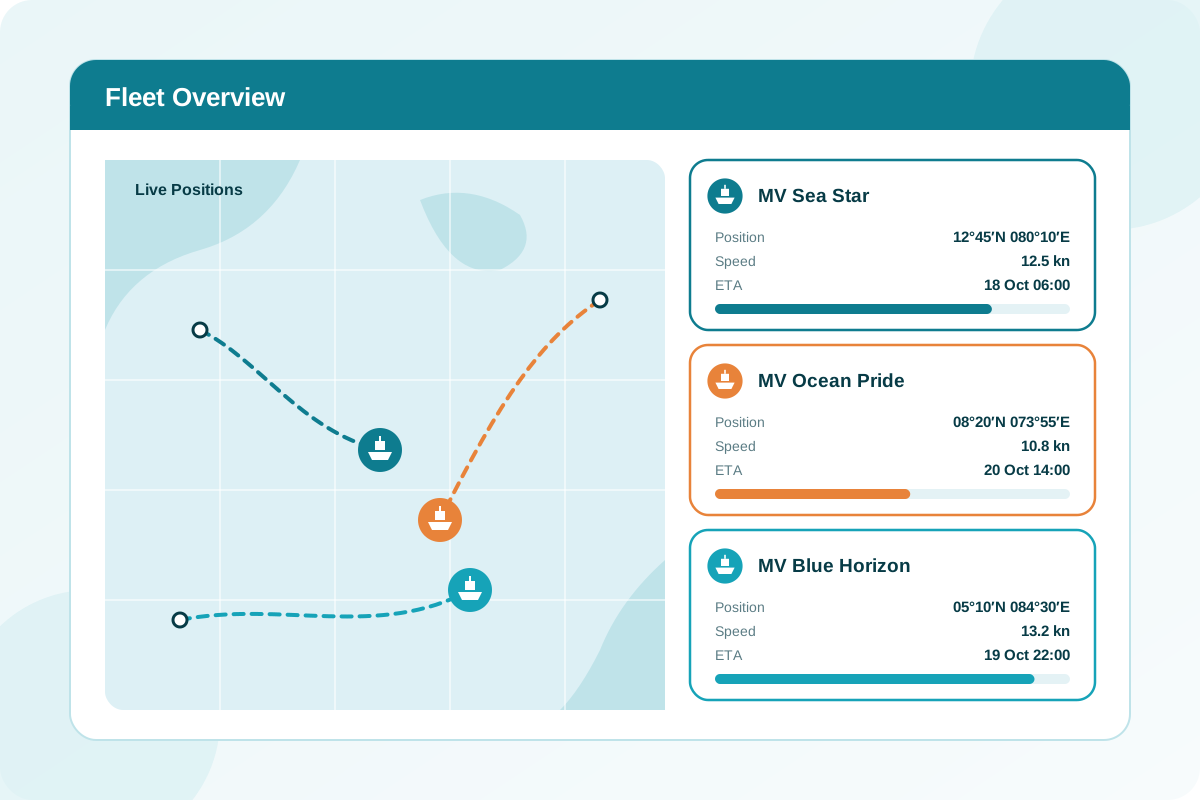
Review position, speed, ETA and historical performance data to help shore teams monitor voyages and compare vessel performance.
Reduce repetitive manual entry with automated data capture where integrations are available, validation checks and digital report synchronization.
Capture daily operational data, validate entries and share reliable vessel performance information with shore management.
Record navigation, engine, fuel and weather information
Review entries and flag missing or inconsistent values
Compile the vessel's daily operational summary
Transmit the report to shore management
Review fuel usage, voyage progress and fleet trends
Key Highlights
Review vessel position, distance run and ETA.
Track engine metrics and daily vessel performance.
Monitor fuel usage and remaining onboard quantities.
Connect vessel reporting with shore-side operations.
Improve reporting accuracy, monitor vessel performance and give shore teams better visibility into fuel, navigation and voyage operations.